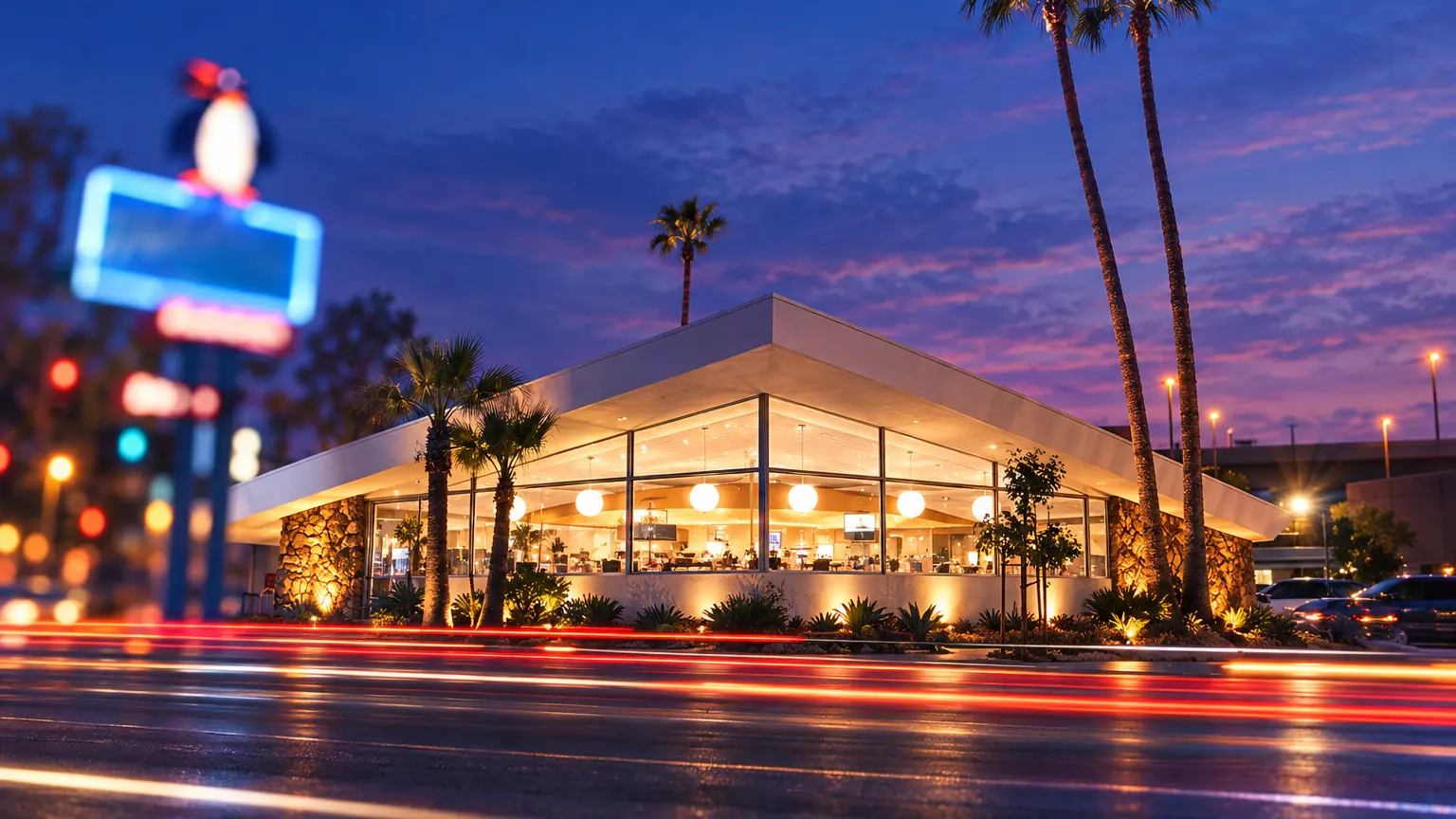
A proposal for the Santa Monica counter
Sit down. Tap your usual. It’s on the line before the coffee’s poured.
I eat at your counter most weeks, and at the rush I wait about five minutes before anyone can take my order. I’m proposing a tablet at every counter stool, wired into your Toast, and a 60-day pilot to measure it.
The wait is the five minutes before anyone takes the order.
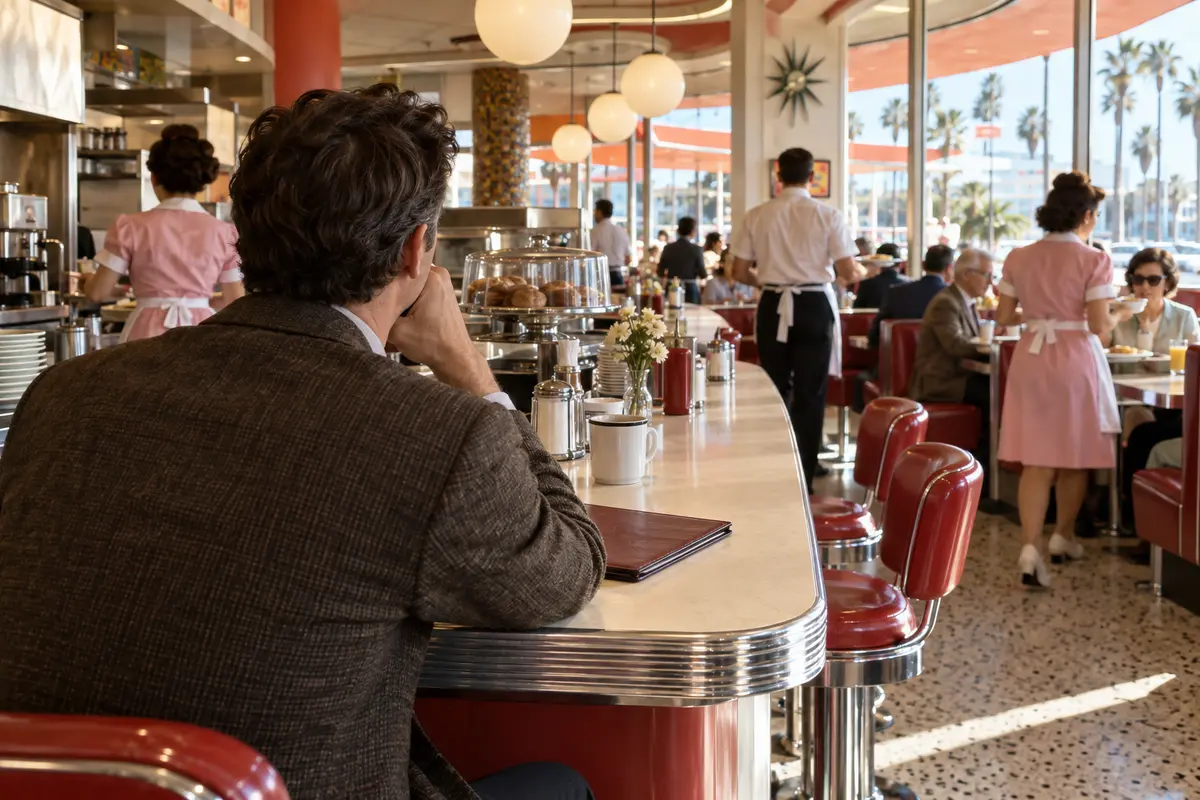
When it’s busy, I sit down at the counter already knowing what I want, and I wait about five minutes before anyone can take my order. The staff are great. The rush is the problem.
“Terrible late service, making us wait not taking order while serving others who came in after we did.”
To be fair: most reviews praise fast, friendly service, and one blogger’s food came out quickly on a busy Saturday. The gap I see is the busy hour itself: every server is mid-table, and a guest who already knows the order has no way to place it.
How a regular’s visit goes
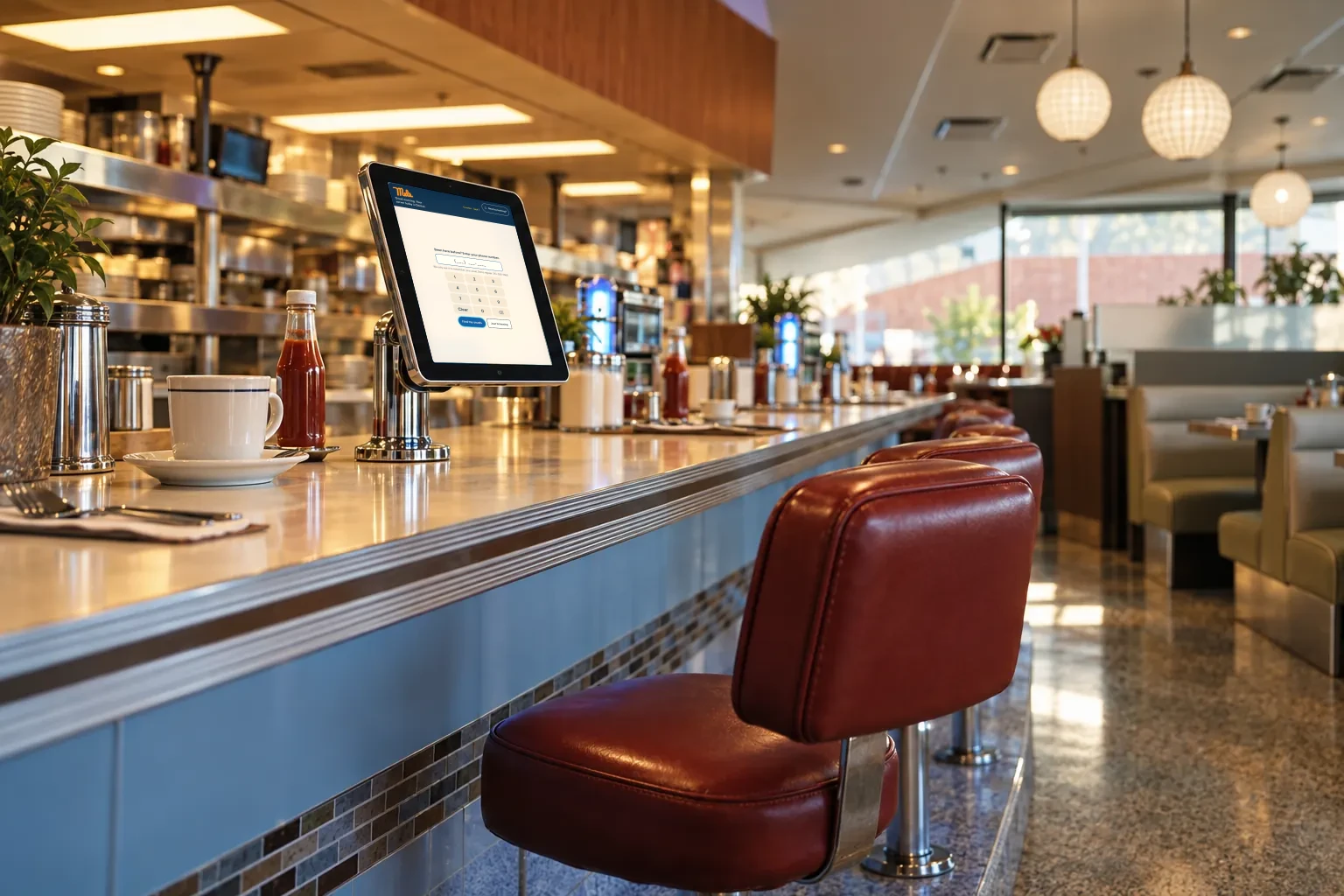
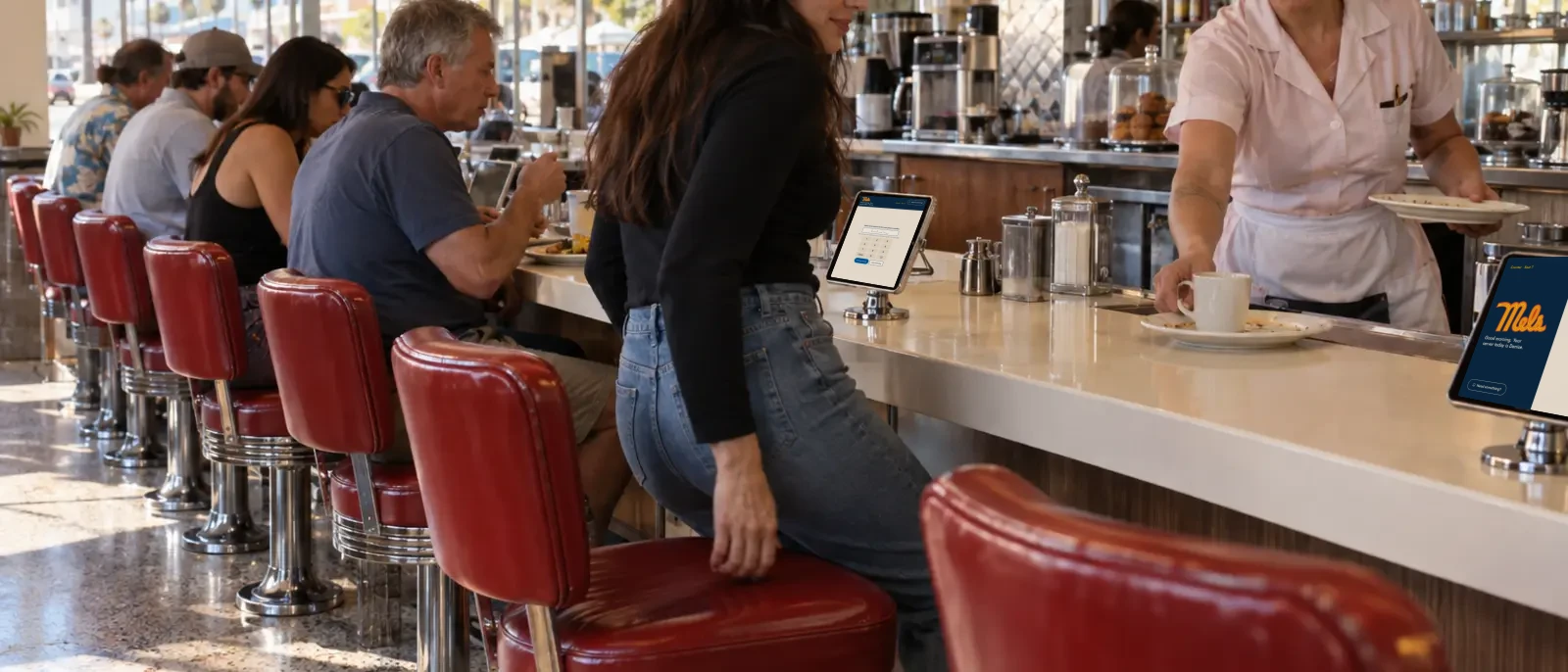
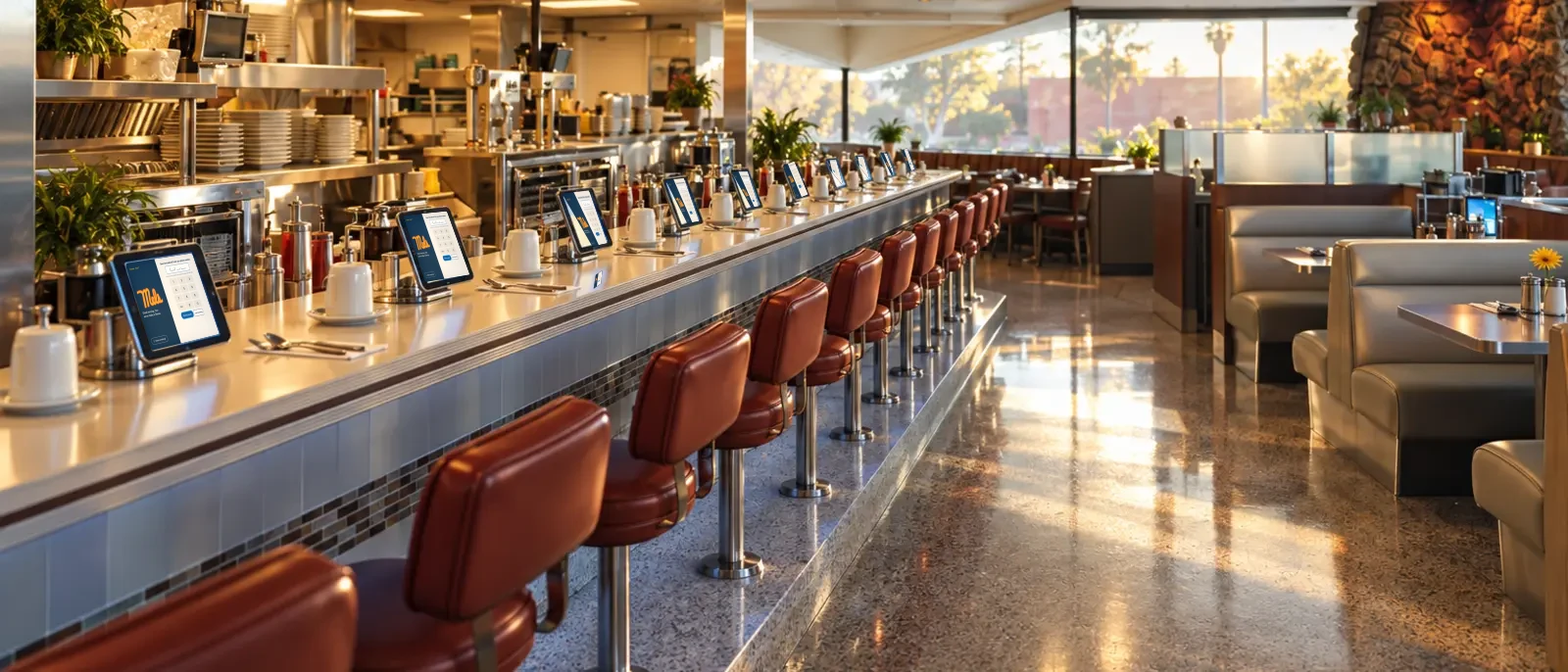
1Sit at the counter. The tablet is already at your stool. Concept render 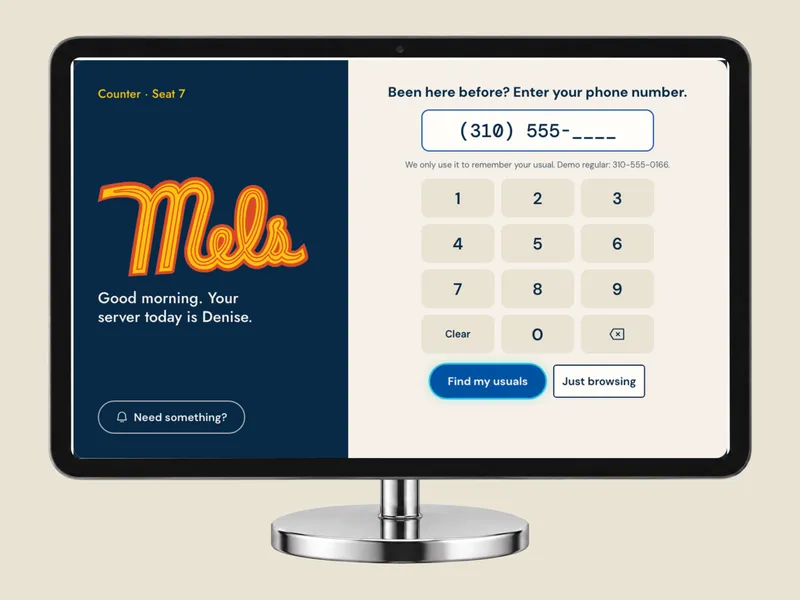
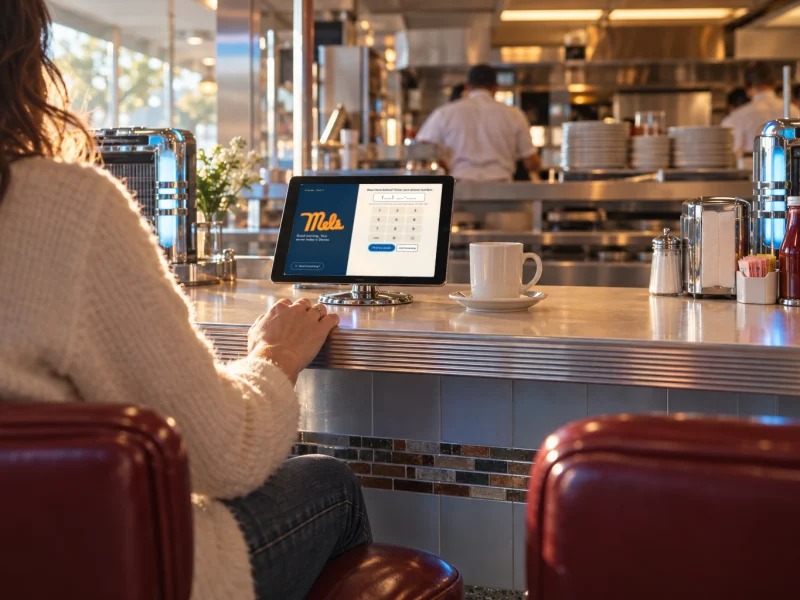
2Tap your phone number. The tablet knows you. Prototype screen on a render 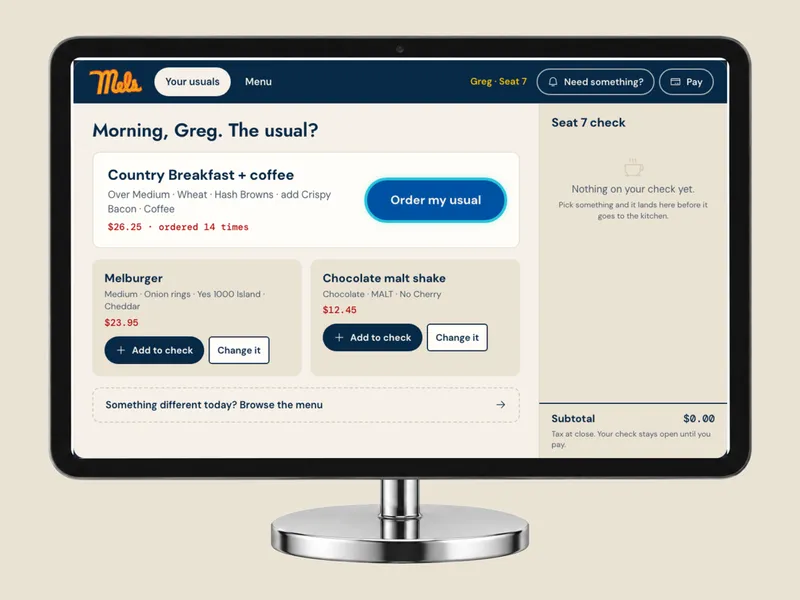
3Tap “Order my usual.” It’s on the line in five seconds. Prototype screen on a render 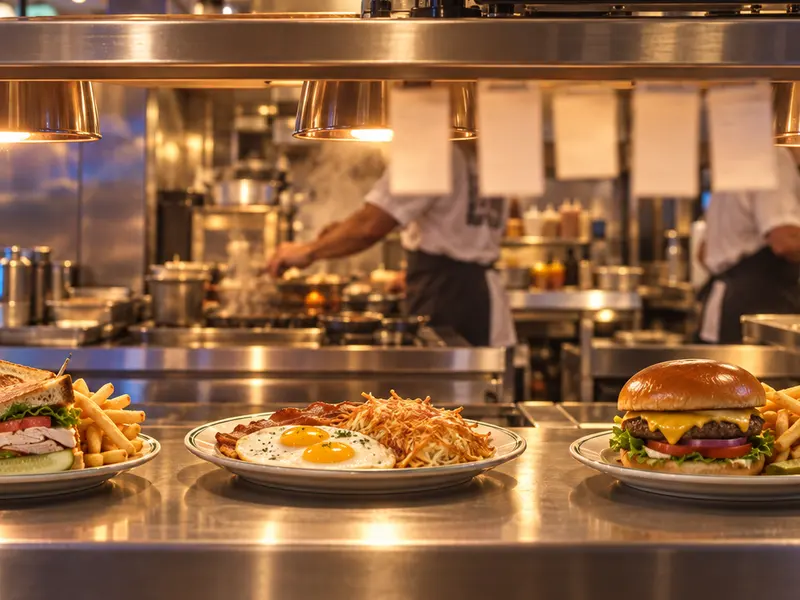
4Food arrives. The server still brings it and closes the check. Concept render
Try it. This is the tablet, working.
Tap 310-555-0166 to order as me, a regular with saved usuals. Any other number starts you as a new guest, remembered on this device. The menu, prices and modifiers are the real Santa Monica menu. Doneness is a slider.
Open the full-screen demo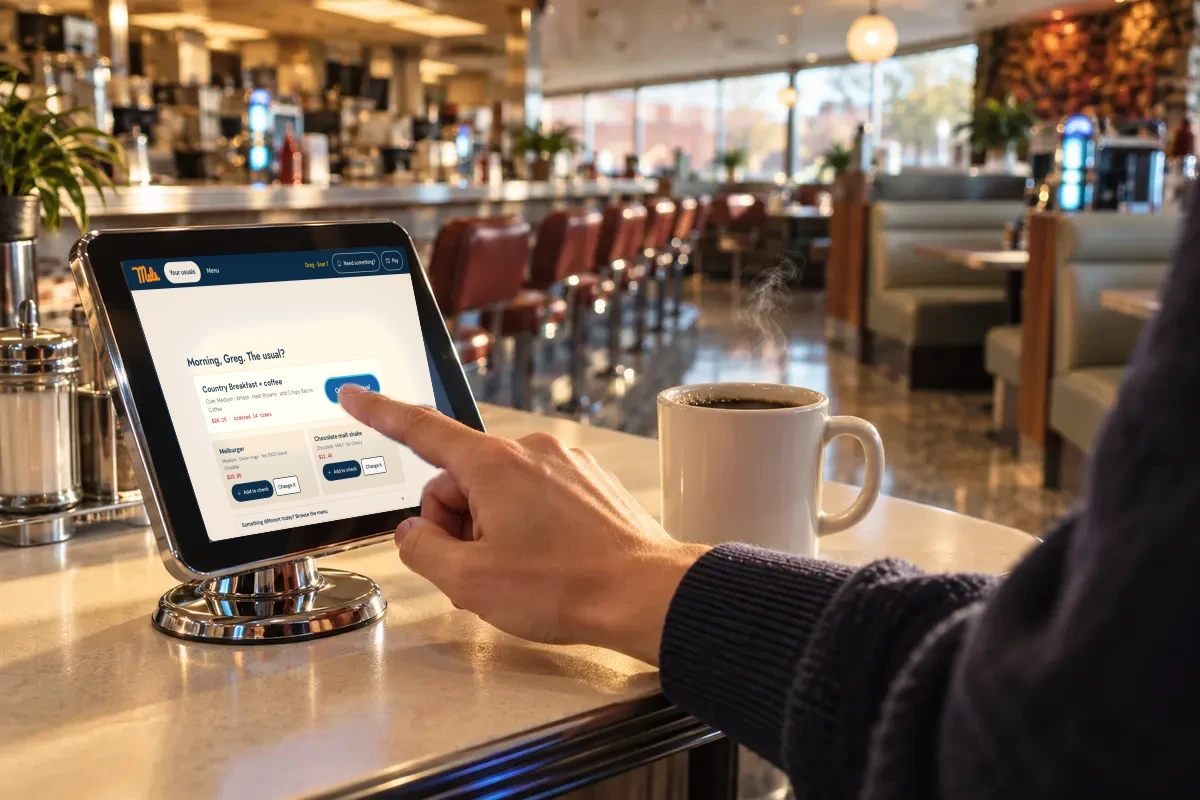
What Toast receives from this tablet 0 calls
Live log of the calls this demo would make to the Toast Orders API. GUIDs are placeholders until the sandbox credentials arrive.
- Nothing sent yet. Order something on the tablet.
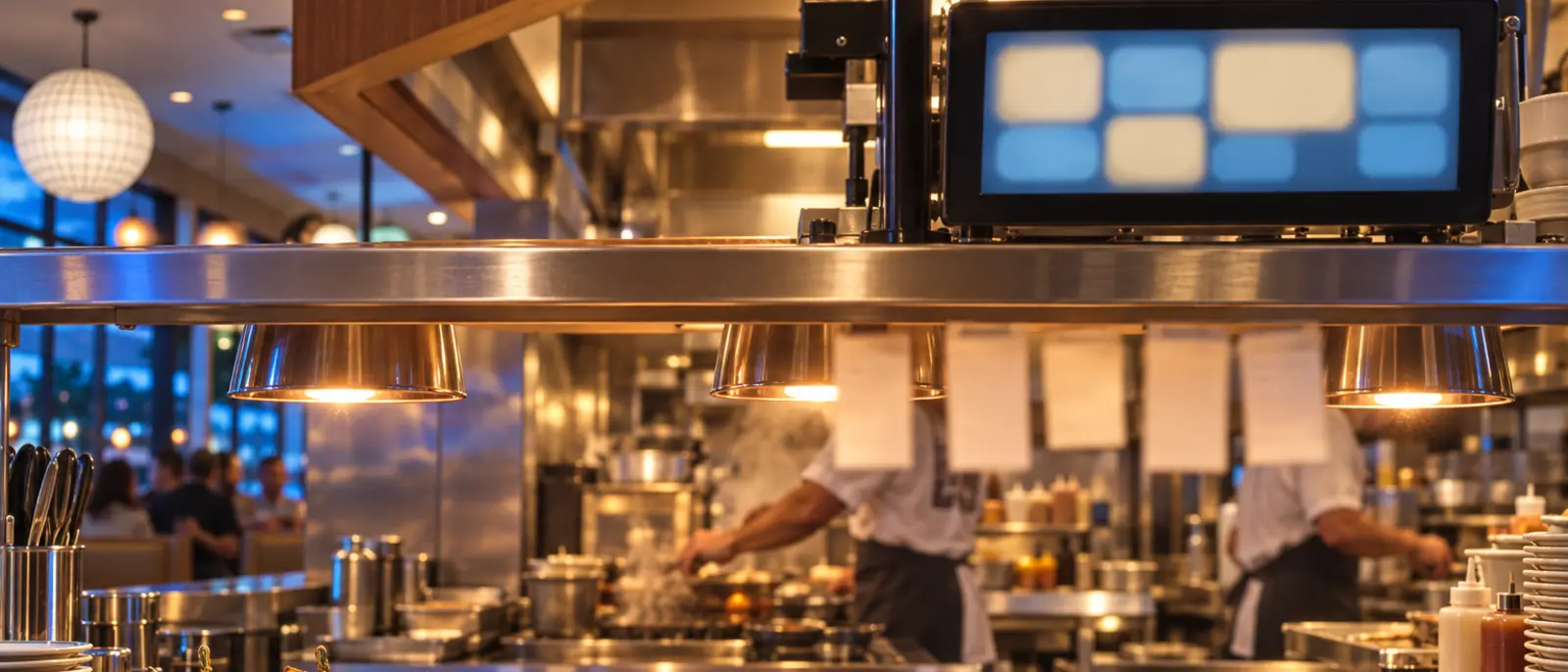
Your staff sees tablet orders the same way they see everything else.
These screens update live from the tablet above. Send an order, ask for a refill, or close the check from the server’s phone.
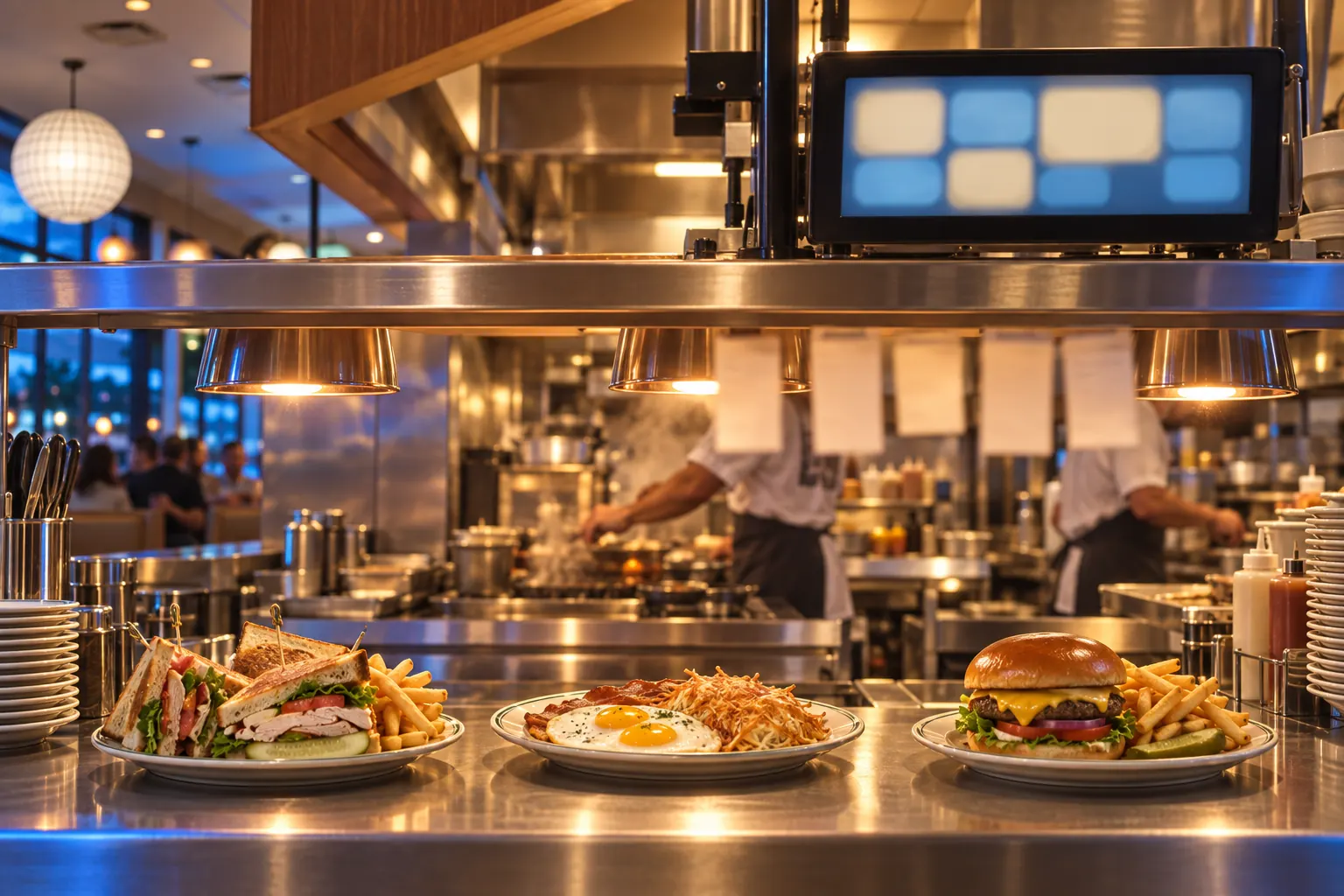
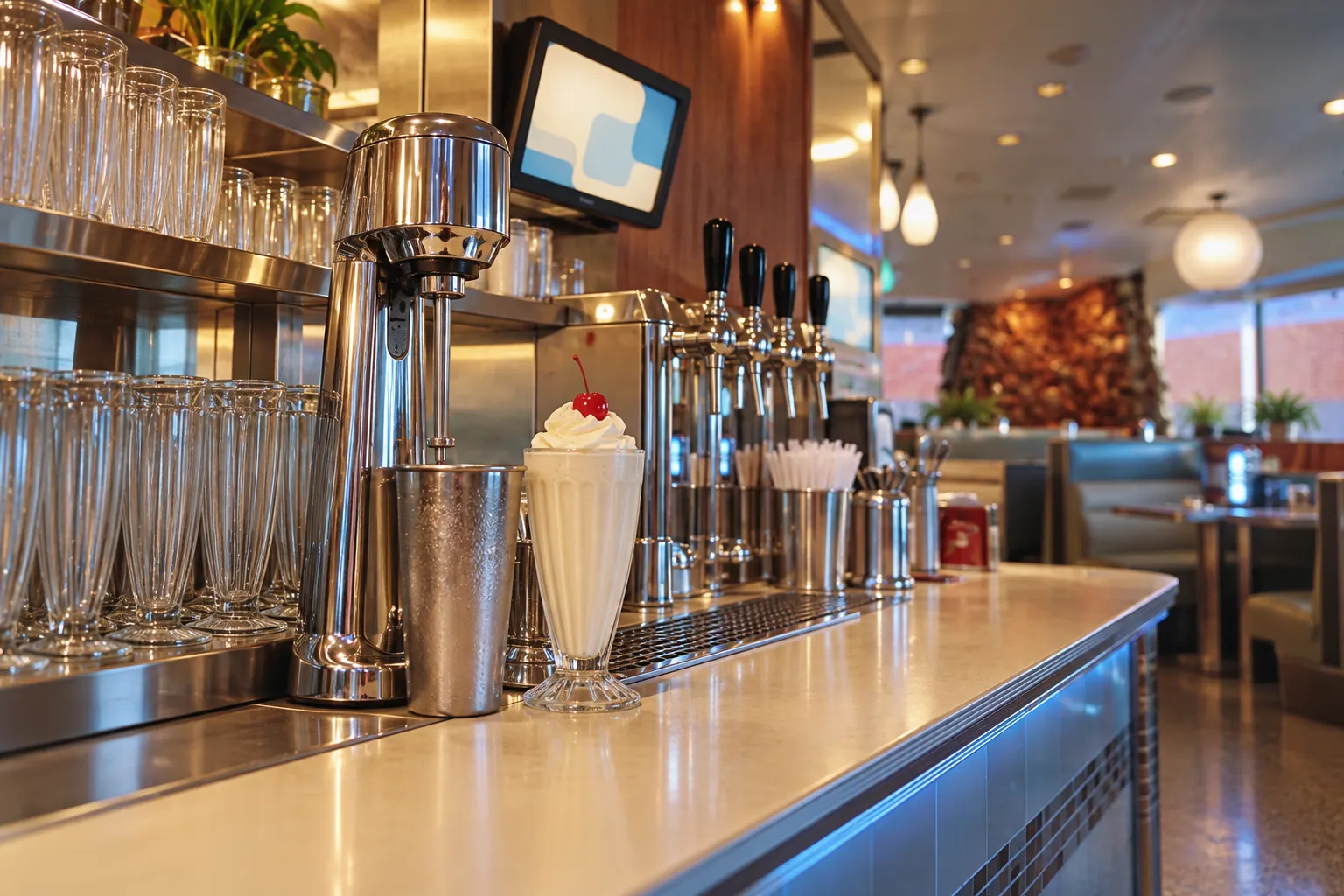
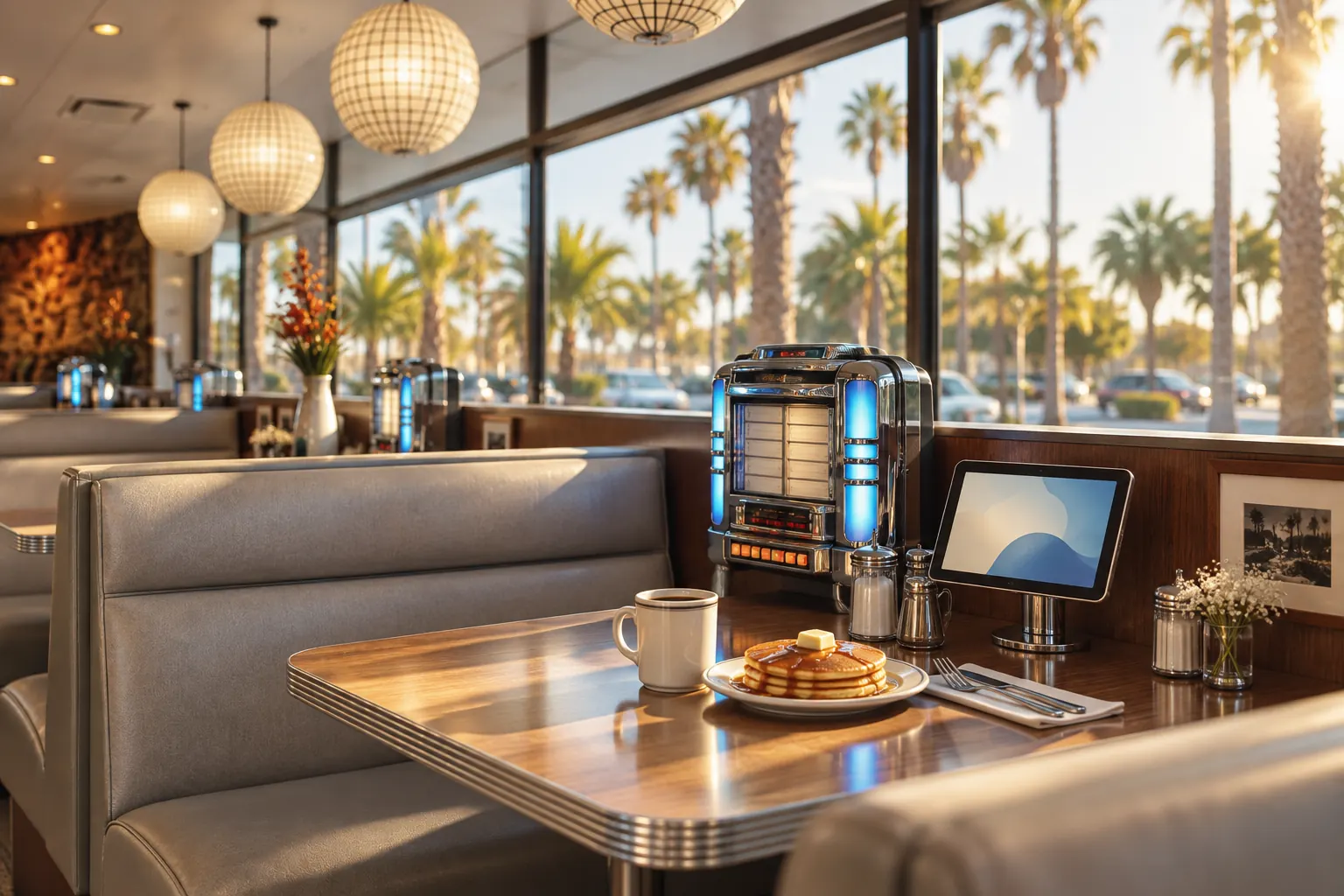
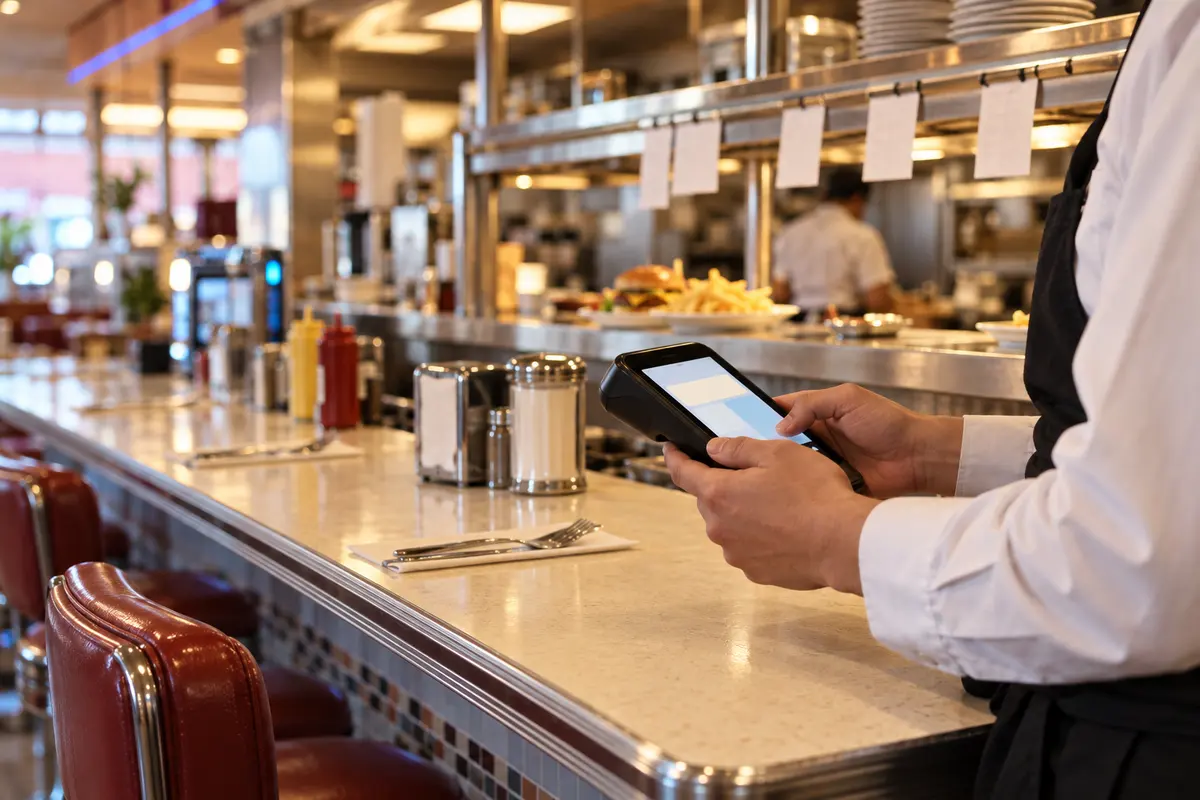
Concept renders, not photos of the restaurant.
- The server keeps the sale. Every tablet order posts with the section server on it, so sales and tips land where they do today.
- A human greets every guest. The tablet takes the order. It doesn’t replace the hello, the refill or the check-in.
- Requests stay off the kitchen tickets. Refills, napkins and “clear my plate” go to the server’s phone and the fountain screen, never as $0 tickets on the line.
How it talks to Toast
The tablet never replaces Toast. It becomes one more way an order gets into it, next to the POS and online ordering.
The three calls that do the work
POST /prices- Before every send. Toast calls it “the only reliable and supported way” to get the check amount. Creating orders
POST /orders- First round. Dine-in with
table,serverand aseatNumberon every selection. Order type details, Selection.seatNumber POST …/checks/{guid}/selections- Second and later rounds append to the open check. A new order on an occupied table would stay hidden until the first one closes. Adding items to a check
Toast voids whole orders only, so nothing posts until the cancel window closes; after that the server handles changes on the POS. Voiding an order
Toast already does this
- Seat numbers on every item and one check per seat
- Ticket routing to grill, eggs, fryer and fountain, set in Kitchen configuration
- All-day counts that include tablet orders
- Closing and paying the check at the POS or on a handheld
- Toast Loyalty, attached by staff at close
I build this
- An always-on Mels screen at each stool, in your brand
- Phone recognition and one-tap usuals, in Mel’s own guest store
- “Need something?” requests to the server and fountain
- Holding mains until apps are bumped, since API orders fire right away
- Hours gate, per-round item cap and the cancel window
Toast loyalty can’t attach to API orders. Toast says so in its Orders API overview. In the pilot the server attaches Toast Loyalty at close, and the tablet keeps its own memory of your usuals.
Toast approval is the critical path. Write access comes through a custom integration requested through your Toast rep. Toast publishes no timeline. My estimate is 6 to 12 weeks, so the rep call is step one.
The cheaper alternative needs no build. Toast Mobile Order & Pay puts a QR code on the counter with nothing to build; Toast quotes the add-on price through your rep. The tablet has to earn its keep on what QR can’t do: a screen that’s always there, remembers the regular, and calls the server.
Faster turns at the counter are the money. Bigger checks are a bonus.
Independent, peer-reviewed
About 10% shorter meals
Tabletop devices across a 66-restaurant casual chain, 2.6 million checks. Check size rose about 1% (2.9% in the 2017 draft). Waiters still took the first order. Tan & Netessine, Management Science, 2020
Vendor claims, treat as ceilings
- 18% faster turns and 20% higher server tips. Ziosk
- Chili’s saw appetizers up about 20% and desserts up 20 to 30%, per executives. Ziosk history
- About 10% higher checks. Presto, via CNBC
- About 10% more revenue, tickets up to 12% larger. Toast Mobile Order & Pay
Regulars
- Loyalty-enrolled guests come back about 4 times as often as walk-ins. Toast Regulars Report (vendor)
- Loyalty members make 22% more visits a year. Circana 2025, cited in the same report (industry)
Convenience is why I keep coming back. A counter that remembers my order would bring me back more often.
No published study measures repeat visits from a saved order at a dine-in tablet. The pilot measures it.
The pilot: every counter stool, 60 days
Cheap, measured on your own Toast data, and reversible. The stands unbolt.
- Before the pilot, 6 to 12 weeksToast approval and buildRep call, custom-integration request, sandbox, nightly menu sync. The cook line and servers see the screens before launch.
- Pilot days 1 to 14Soft launchMornings only. A counter server walks each guest through it.
- Pilot days 15 to 60Full counterEvery shift, measured on Toast opened and closed timestamps.
- Day 61Go or no-goKeep it, change it, or pull it out in an afternoon.
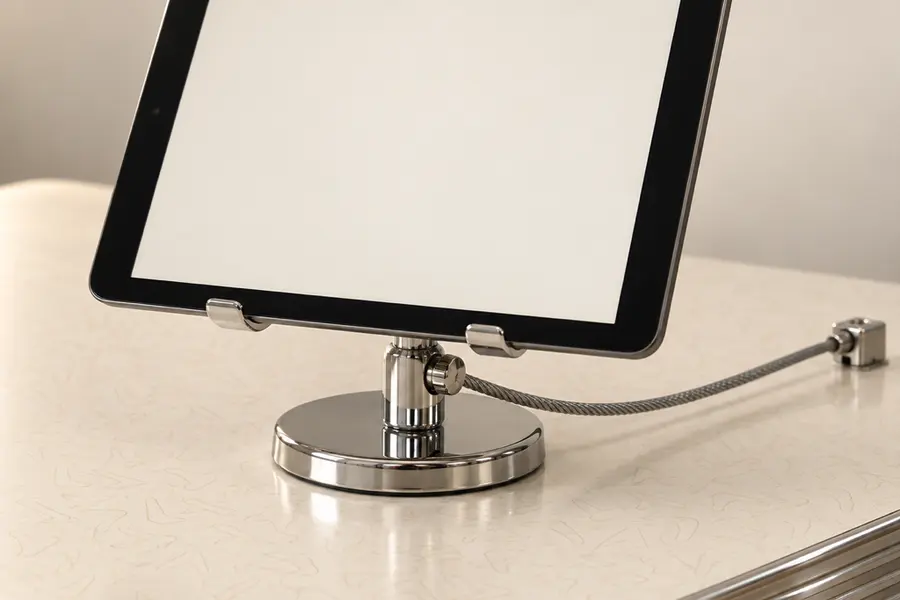
Hardware budget, per stool, shown for 15
| Per unit | Galaxy Tab A9+ recommended | iPad (A16) |
|---|---|---|
| Tablet | $220 | $349 |
| Locking swivel stand | $106 to $125 | $106 to $125 |
| In-counter USB-C power | ~$40 | ~$40 |
| 18 units: 15 stools, 2 spares, 1 fountain screen, rounded | $6,500 to $7,000 | $8,900 to $9,300 |
- Fountain screen: one more tablet of the same kind on the same stand, about $375 to $515, counted in the totals
- Device management, about $3 to $6 per tablet a month
- Toast integration, about $25 per location a month, per Toast’s own blog
- Wi-Fi access point, $500 to $1,500, only if counter coverage is weak
- Card readers: $0. The server closes it at the POS or on a handheld
- I build and run the pilot software myself. Hardware is the only pilot cost. If the numbers hold at day 60, we agree terms for the rollout.
What the pilot measures
- Turn time per stool, from Toast opened and closed timestamps
- Order accuracy, counted as voids and remakes
- Check size and tip % against the same weeks before
- Regular sign-ups and how many come back to tap a usual
Go if all four hold
- Median counter turn time drops at least 5%
- Tip % holds within one point
- Remakes don’t rise
- The counter servers want to keep it
Then
- Phase 2: booths, one tablet per booth with split-by-seat
- Phase 3: pay at the seat
What could go wrong, and the answer to each
- Hygiene
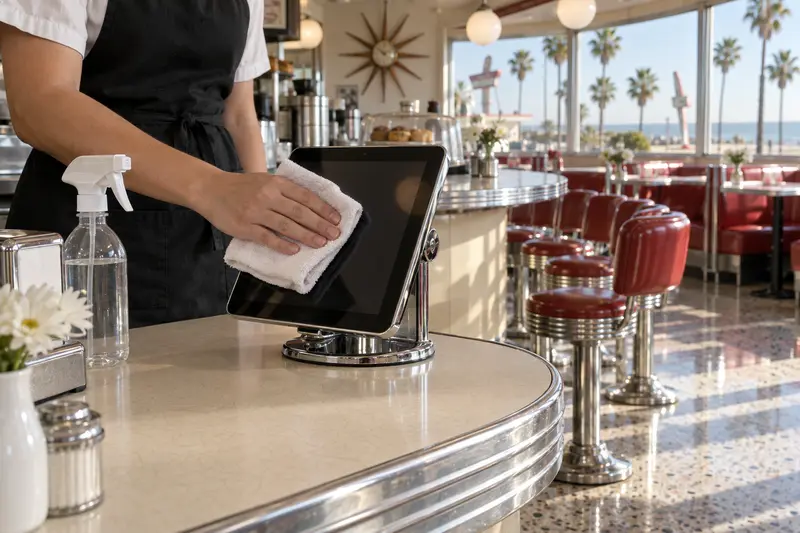 Concept render Sealed enclosure rated for quat or alcohol wipes. Wiped at every bus, with antimicrobial screen film.
- Kids tapping
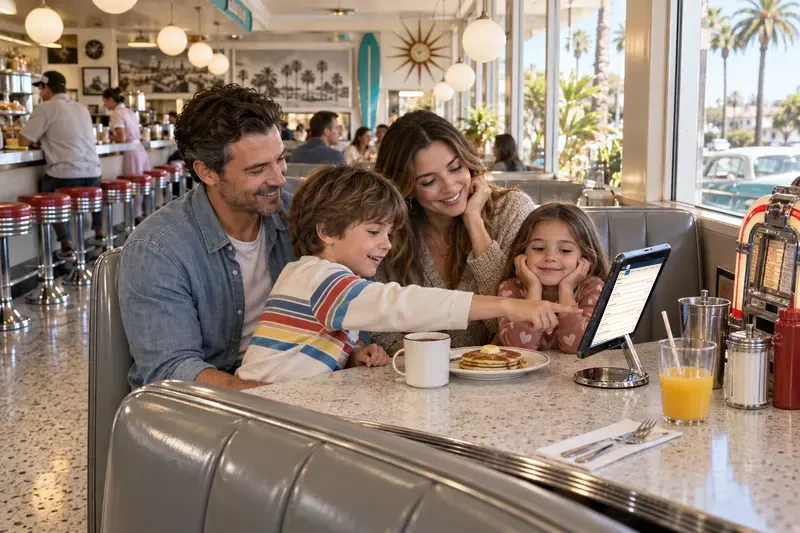 Concept render Review screen before every send, an 8-item cap per round, and a server unlock above it. No games.
- Firing too early
- Toast API orders skip approval, so the tablet asks before sending and holds mains until apps are bumped.
- Split checks
- One check per stool by default. Booths pick one check or split by seat up front.
- Allergens
- Flags on items, an allergy field that prints in red on the ticket, and the server confirms in person.
- Tip fatigue
- One tip, at close, on the full check, with a clear custom or no-tip option. Never a prompt per round.
- Theft or breakage
- Locking stand, cable lock, remote lock through device management, two spares on the shelf.
- Wi-Fi drops
- The tablet says “Ask your server” and holds nothing silently. Orders never queue and fire late.
- Staff pushback
- Servers keep every sale and tip. Guest surveys never score servers, after tablet ratings cost servers shifts elsewhere.
- Menu drift
- The menu syncs from Toast nightly, and 86’d items disappear from the tablet as soon as the kitchen marks them.
Let’s pilot it at the counter.
Every stool, sixty days, your Toast numbers. If it doesn’t earn its spot, the stands come out.
I build and run the pilot software myself. Hardware is the only pilot cost. If the numbers hold at day 60, we agree terms for the rollout.
Email me at greg@gregspero.com